Have you ever received a message with just “MK” and paused for a second, wondering what it actually means? 🤔 You’re not alone. In today’s fast-paced digital world, short forms and slang dominate conversations.
Understanding these abbreviations is essential to staying connected and avoiding confusion.
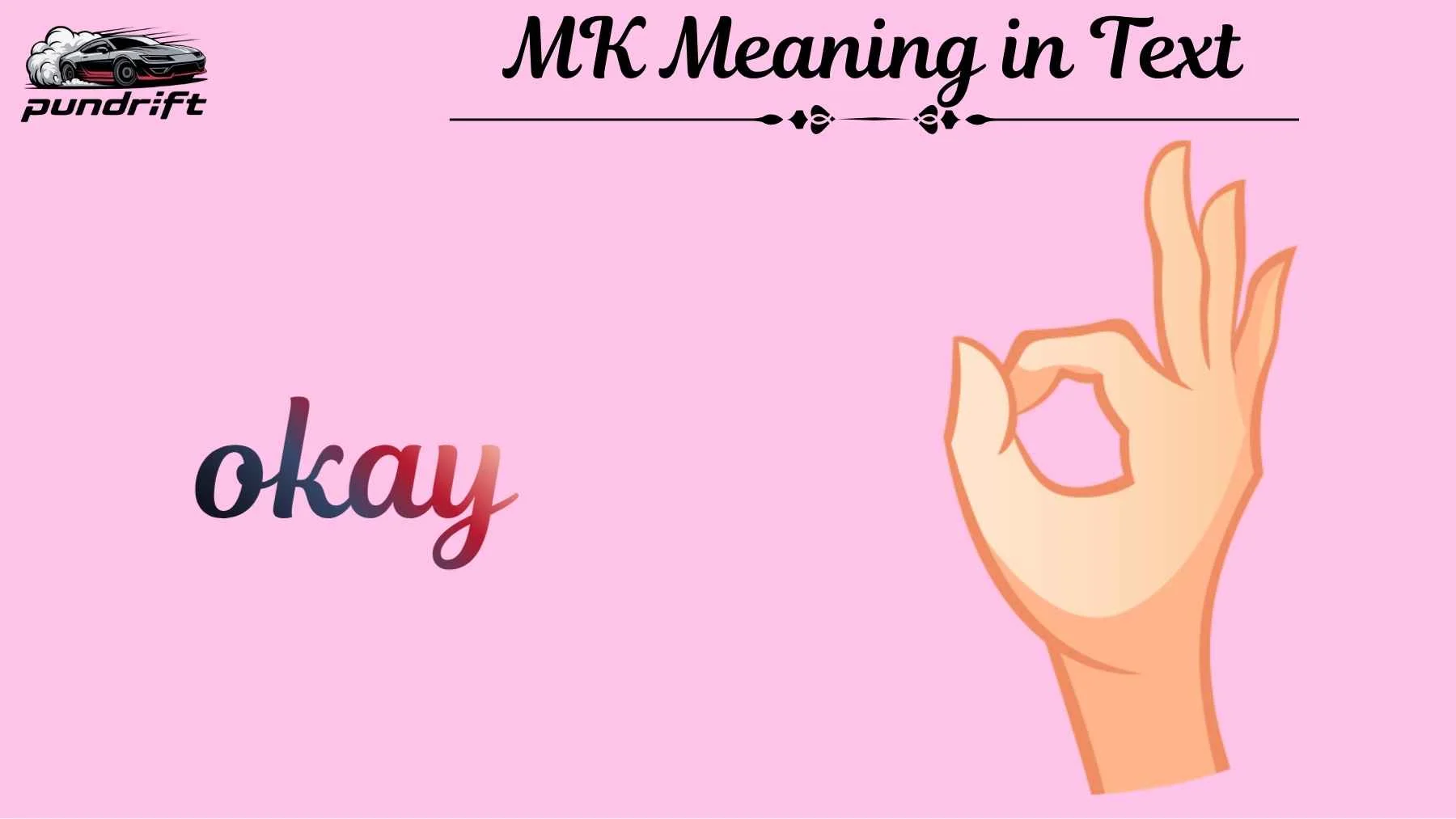
The MK meaning in text is simple yet versatile. It often represents agreement, acknowledgment, or a casual response.
However, its meaning can shift slightly depending on tone, context, and the platform you’re using.
In this complete guide, we’ll explore everything you need to know about MK in text messages — from its origin to real-life examples and expert insights. Let’s dive in! 🚀
What Does MK Mean in Text? 📱
The abbreviation MK typically stands for:
- “Mm, okay”
- “Okay” (casual or short form)
It’s often used in informal conversations to show acknowledgment or mild agreement. Unlike a full “okay,” MK feels shorter and slightly more relaxed.
Example:
- Friend: “Meet me at 5 PM.”
- You: “MK 👍”
Here, “MK” simply confirms the plan.
Origin of MK in Texting Culture 🕰️
The rise of MK meaning in text can be traced back to early SMS culture. Limited character counts encouraged users to shorten words and phrases.
Over time, “Mm, okay” evolved into “MK” as a quicker way to respond without typing full sentences.
“Digital language evolves for speed, convenience, and emotional tone.”
Today, MK is widely used across messaging apps like WhatsApp, Snapchat, Instagram, and even gaming chats.
Different Meanings of MK Based on Context 🔍
Although the primary meaning is simple, MK can carry different tones depending on how it’s used.
| Context | Meaning | Tone |
|---|---|---|
| Agreement | Okay / Got it | Neutral |
| Disinterest | Fine, whatever | Slightly negative |
| Casual reply | Mm-hmm | Relaxed |
Understanding tone is key when interpreting MK in chat.
When to Use MK in Text Messages 💡
You can use MK in several everyday situations:
- Quick confirmations
- Casual conversations
- Responding without enthusiasm
- Acknowledging instructions
Example:
- “Don’t forget the assignment.”
- “MK, I’ll do it.”
It keeps the conversation flowing without overthinking your reply.
When NOT to Use MK ❌
While MK is useful, it’s not always appropriate. Avoid using it in:
- Formal communication
- Professional emails
- Serious discussions
- Emotional conversations
In these cases, using full responses shows respect and clarity.
MK vs OK vs K: What’s the Difference? 🤷♂️
These three may look similar, but they carry different tones.
| Term | Meaning | Tone |
|---|---|---|
| OK | Standard agreement | Neutral |
| K | Very short response | Sometimes rude |
| MK | Mm, okay | Casual and softer |
MK is often seen as more polite than “K” but less formal than “OK.”
Is MK Rude or Polite? 🤔
This is a common question. The answer depends on tone and context.
MK can feel:
- ✔ Polite in casual chats
- ✔ Neutral in quick replies
- ❌ Slightly dismissive if overused
For example, replying “MK” repeatedly in a serious conversation may come across as uninterested.
Examples of MK in Real Conversations 💬
Example 1: Friendly Chat
Friend: “Let’s watch a movie tonight.”
You: “MK sounds good 🎬”
Example 2: Slight Annoyance
Person: “You should’ve told me earlier.”
You: “MK…”
Example 3: Quick Acknowledgment
Boss: “Submit the report by 3 PM.”
You: “MK”
Notice how tone changes meaning.
MK in Social Media & Gaming 🎮
The MK meaning in text is also common in:
- Online gaming chats
- Instagram DMs
- Snapchat streaks
- Group chats
Gamers often use MK to confirm strategies or acknowledge teammates quickly.
Psychological Meaning Behind MK 🧠
Interestingly, MK can reveal subtle emotional cues:
- Short replies = low engagement
- Quick acknowledgment = efficiency
- Neutral tone = no strong emotion
This makes MK a powerful yet understated communication tool.
Common Misinterpretations of MK ⚠️
Some people misunderstand MK as:
- Rude or dismissive
- Lack of interest
- Sarcasm
While this can be true in certain contexts, it’s not always the case. Tone matters more than the word itself.
How to Respond to MK 🗨️
If someone sends you “MK,” here’s how you can respond:
- Continue the conversation naturally
- Ask a follow-up question
- Match their tone
Example:
“MK” → “Cool, see you then!”
Expert Tips for Using MK Effectively 💡
- Use it in casual conversations only
- Avoid overusing it
- Pair it with emojis for clarity 😊
- Consider tone before sending
Using MK correctly improves your digital communication skills.
FAQs:❓
1. What does MK mean in texting?
MK means “mm, okay.” It’s a casual way to agree or acknowledge a message.
2. Is MK rude in messages?
Not necessarily. It depends on tone and context. It can feel neutral or slightly dismissive.
3. Is MK better than saying K?
Yes, MK is generally softer and more polite than “K.”
4. Can I use MK in professional chats?
No, it’s best to avoid MK in formal or professional communication.
5. Why do people use MK instead of OK?
People use MK because it feels quicker, more casual, and conversational.
Final Thoughts: ✨
The MK meaning in text may seem small, but it carries powerful communication value. It represents quick acknowledgment, casual agreement, and subtle emotional tone.
Understanding how and when to use MK helps you communicate more effectively in today’s digital world. Remember, context is everything. A simple two-letter reply can mean different things depending on the situation.
So next time you see “MK,” you’ll know exactly what it means—and how to respond like a pro. 💬

I create simple and helpful content about meanings, slang words, and text terms. I enjoy making difficult words easy to understand so readers can quickly learn and use them in daily conversations.